Photo by: WVU Athletic Communications
Veteran Aide Trickett Back for His Third Coaching Stint at WVU
March 25, 2026 02:21 PM | Football
MORGANTOWN, W.Va. – Rick Trickett is back for a third assistant coaching stint at West Virginia University.
The longtime aide first coached the Mountaineer defensive linemen on Frank Cignetti's staff from 1976 to 1979.
He returned to Morgantown in 2001 to coach the offensive line and spent six seasons with Rich Rodriguez from 2001 to 2006, and now he's back for a coaching encore following four years at Jacksonville State, three of those with Rodriguez.
"I just turned 78 (Monday) so a lot of things are flying by right now," the Masontown native and Glenville State graduate said yesterday. "When college football was changing so much the last three or four years, I didn't know if it was a good fit for me to be up on this level or not. I really enjoyed the three years I was with coach Rodriguez at Jax State, and I really liked Jax State. I had a great time there – great people and stuff – but I'm from West Virginia, and after talking with coach, I felt like we needed to come back and help get this thing right."
Things were certainly right the last time Rodriguez and Trickett were paired together here in the early 2000s.
West Virginia had the nation's No. 2-ranked rushing offense in 2002 as a result of putting tailbacks Avon Cobourne and Quincy Wilson in the backfield together with quarterback Rasheed Marshall.
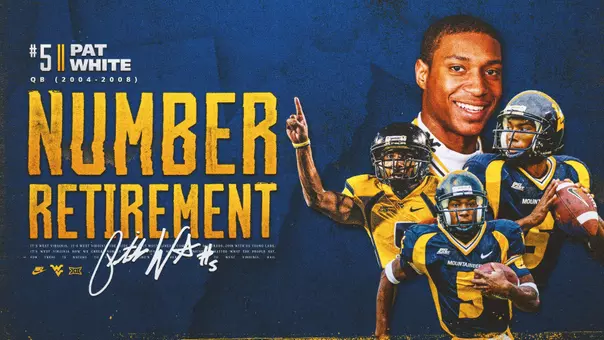
Trickett was responsible for recruiting quarterback Pat White to WVU, which put the Mountaineers down a path toward an outright Big East title in 2005 and a victory over Georgia in the 2006 Sugar Bowl.
Trickett coached the WVU offensive linemen for one more season in 2006, resulting in a victory over Georgia Tech in the 2007 Gator Bowl, before joining Jimbo Fisher's staff at Florida State, where the Seminoles claimed a national championship in 2013.
Trickett's 52-year coaching tenure also includes stops at power conference programs Mississippi State (1989-92), Auburn (1993-98) and LSU (2000).
Although Trickett's and Rodriguez's paths never crossed when Rodriguez was a young WVU player, the two eventually met through mutual friend Ike Morris. Rodriguez was looking to bring in some big-name coaches for a coaching clinic he was once conducting at Glenville State and Morris suggested Trickett.
"Rick came to speak, and I don't remember where he was then, but it was some big school, and he came as a favor to Ike and then we got to be friends," Rodriguez recalled. "We probably had the best clinic in the country for a Division II school with coach Trickett, Jimbo (Fisher) and some other Division I coaches."
Now, Rodriguez has reached back into his past for a little wisdom to add to a coaching staff that he believes perfectly complements the group of outstanding young assistants he has already assembled.
"It helps to have a couple of old dudes in here with gray hair," Rodriguez joked. "I've got a lot of good young coaches, but I'm an old guy now, and Rick is an old guy, too."
Trickett's reputation for developing quality offensive lines should help a Mountaineer rushing attack that averaged just 3.7 yards per carry last year and struggled mightily in the season finale against seventh-ranked Texas Tech, gaining only 37 yards on 22 attempts.
While that was happening, Trickett's offensive line at Jacksonville State paved the way for Cam Cook to rush for a nation's-best 1,659 yards and the Gamecocks to average 246.7 yards per game, fifth-best nationally.
Cook and two of the guys blocking for him last year, Amare Grayson and Cam Griffin, have also joined Trickett at West Virginia for this season.
The former Marine and Vietnam War veteran has long had a reputation for being a demanding coach who accepts nothing less than maximum effort each time out. Rodriguez said that demanding nature has many benefits.
"The biggest thing about coach Trickett, yeah, he's a hard-driving disciplinarian and you've got to do it a certain way, but part of his success is there is nobody who looks after his guys more than Rick Trickett," Rodriguez pointed out. "I'm talking about every day. What they're going to do, how they are living and being disciplined … there is a reason why so many of his guys who have gone on to play in the NFL and have had success still keep in touch with him and appreciate what he's done for them."
"I've altered a few things," Trickett conceded, "but I'm still going to demand out of them what we demanded out of them in the past. I think that's the biggest issue is they haven't had that until they get to a certain program, but if they really love football and they want to play football, the cream will come to the top.
"My whole thing is about taking a kid that couldn't do this or couldn't do that, and I coached him and coached him and all of a sudden, I see it being done," Trickett added. "After Florida State, I went to Glenville State just to coach for three years and then I went to Jacksonville State. I was at Auburn and Terry (Bowden) quit and there weren't many jobs in 1996 or 1997, so I went from being an assistant head coach at Auburn to Glenville. Then I went to become the assistant head coach at LSU, all within about eight months. I'm just going to coach because I love to coach."
What Trickett offers West Virginia today is 52-year's-worth of coaching wisdom, especially in recruiting. He's literally seen it all through the years.
"I trust my eyes on recruiting, and I really want to meet the kid," he explained. "I'm a slow trigger. We had six or seven of them in here on Junior Day, and I didn't offer any of them on Junior Day. But then after meeting them, I turned around after a week or so and offered four or five of them.
"If somebody goes out and makes an offer and doesn't know the kid, doesn't know his background or if he's a good guy or a bad guy; does he fit what we do?" Trickett pointed out. "Can he take hard coaching? I think you've got to trust your eyes and, of course, I've seen a lot of good players, and I've had a lot of great players, so my age has helped me. I can compare this guy and he's like a Rodney Hudson or this guy is like Willie Anderson or Landon Dickerson was."
His vast experience also applies to in-game decision making. Trickett doesn't need to rely on elaborate charts or analytical stats to help him make critical decisions.
He's seen everything play out in front of him many times before and he's got thousands of examples through the years upon which to fall back.
"I can sit there and tell you if we're blocking them pretty good, and it's third and one or fourth and one, we might want to go for it. But if they are big and they're kicking our ass, no, I want to punt it," he chuckled.
Trickett said a key developmental moment for him came early in his career when the head coach he was working for at the time required each member of the staff to get up in front of everyone and explain everything that they were going to teach their players during the season.
It put him on the spot and made him defend what he was doing but also helped him better understand what the guys on the other side of the ball were thinking as well.
"I thought that made us a lot better coaches because when the defensive coach got up, I learned what he was teaching and I could say, 'Okay, maybe I need to do this to make me a little bit better.' There is not much of this going on right now," Trickett observed.
As for the players he's working with right now at WVU, Trickett said he's been pleased so far.
"You bring guys out of the portal, and they come from different programs, and I've only got two of them who really know what I want and how far we've got to go, because they've been with me for two or three years," the coach explained. "The rest of them are learning. I'd say we're maybe a little bit ahead of where I thought we'd be at this time, but I don't want to lay it out there too far.
"If we were playing one of our conference schools, this is the farthest they've ever been and if we're playing another school, this is the farthest they've ever been," he continued. "Well, I don't have them up to those other schools yet, but they're willing to get there because of their willingness to work hard. Coming off spring break, this is usually a bad practice, but as far as the group I had, I was pretty well pleased with them (Tuesday)."
Rodriguez concurs.
"I think we're going to be better up front. The running game has got to be better," he concluded.
The longtime aide first coached the Mountaineer defensive linemen on Frank Cignetti's staff from 1976 to 1979.
He returned to Morgantown in 2001 to coach the offensive line and spent six seasons with Rich Rodriguez from 2001 to 2006, and now he's back for a coaching encore following four years at Jacksonville State, three of those with Rodriguez.
"I just turned 78 (Monday) so a lot of things are flying by right now," the Masontown native and Glenville State graduate said yesterday. "When college football was changing so much the last three or four years, I didn't know if it was a good fit for me to be up on this level or not. I really enjoyed the three years I was with coach Rodriguez at Jax State, and I really liked Jax State. I had a great time there – great people and stuff – but I'm from West Virginia, and after talking with coach, I felt like we needed to come back and help get this thing right."
Things were certainly right the last time Rodriguez and Trickett were paired together here in the early 2000s.
West Virginia had the nation's No. 2-ranked rushing offense in 2002 as a result of putting tailbacks Avon Cobourne and Quincy Wilson in the backfield together with quarterback Rasheed Marshall.
Trickett was responsible for recruiting quarterback Pat White to WVU, which put the Mountaineers down a path toward an outright Big East title in 2005 and a victory over Georgia in the 2006 Sugar Bowl.
Trickett coached the WVU offensive linemen for one more season in 2006, resulting in a victory over Georgia Tech in the 2007 Gator Bowl, before joining Jimbo Fisher's staff at Florida State, where the Seminoles claimed a national championship in 2013.
Trickett's 52-year coaching tenure also includes stops at power conference programs Mississippi State (1989-92), Auburn (1993-98) and LSU (2000).
Although Trickett's and Rodriguez's paths never crossed when Rodriguez was a young WVU player, the two eventually met through mutual friend Ike Morris. Rodriguez was looking to bring in some big-name coaches for a coaching clinic he was once conducting at Glenville State and Morris suggested Trickett.
"Rick came to speak, and I don't remember where he was then, but it was some big school, and he came as a favor to Ike and then we got to be friends," Rodriguez recalled. "We probably had the best clinic in the country for a Division II school with coach Trickett, Jimbo (Fisher) and some other Division I coaches."
Now, Rodriguez has reached back into his past for a little wisdom to add to a coaching staff that he believes perfectly complements the group of outstanding young assistants he has already assembled.
"It helps to have a couple of old dudes in here with gray hair," Rodriguez joked. "I've got a lot of good young coaches, but I'm an old guy now, and Rick is an old guy, too."
Trickett's reputation for developing quality offensive lines should help a Mountaineer rushing attack that averaged just 3.7 yards per carry last year and struggled mightily in the season finale against seventh-ranked Texas Tech, gaining only 37 yards on 22 attempts.
While that was happening, Trickett's offensive line at Jacksonville State paved the way for Cam Cook to rush for a nation's-best 1,659 yards and the Gamecocks to average 246.7 yards per game, fifth-best nationally.
Cook and two of the guys blocking for him last year, Amare Grayson and Cam Griffin, have also joined Trickett at West Virginia for this season.
The former Marine and Vietnam War veteran has long had a reputation for being a demanding coach who accepts nothing less than maximum effort each time out. Rodriguez said that demanding nature has many benefits.
"The biggest thing about coach Trickett, yeah, he's a hard-driving disciplinarian and you've got to do it a certain way, but part of his success is there is nobody who looks after his guys more than Rick Trickett," Rodriguez pointed out. "I'm talking about every day. What they're going to do, how they are living and being disciplined … there is a reason why so many of his guys who have gone on to play in the NFL and have had success still keep in touch with him and appreciate what he's done for them."
"I've altered a few things," Trickett conceded, "but I'm still going to demand out of them what we demanded out of them in the past. I think that's the biggest issue is they haven't had that until they get to a certain program, but if they really love football and they want to play football, the cream will come to the top.
"My whole thing is about taking a kid that couldn't do this or couldn't do that, and I coached him and coached him and all of a sudden, I see it being done," Trickett added. "After Florida State, I went to Glenville State just to coach for three years and then I went to Jacksonville State. I was at Auburn and Terry (Bowden) quit and there weren't many jobs in 1996 or 1997, so I went from being an assistant head coach at Auburn to Glenville. Then I went to become the assistant head coach at LSU, all within about eight months. I'm just going to coach because I love to coach."
What Trickett offers West Virginia today is 52-year's-worth of coaching wisdom, especially in recruiting. He's literally seen it all through the years.
"I trust my eyes on recruiting, and I really want to meet the kid," he explained. "I'm a slow trigger. We had six or seven of them in here on Junior Day, and I didn't offer any of them on Junior Day. But then after meeting them, I turned around after a week or so and offered four or five of them.
"If somebody goes out and makes an offer and doesn't know the kid, doesn't know his background or if he's a good guy or a bad guy; does he fit what we do?" Trickett pointed out. "Can he take hard coaching? I think you've got to trust your eyes and, of course, I've seen a lot of good players, and I've had a lot of great players, so my age has helped me. I can compare this guy and he's like a Rodney Hudson or this guy is like Willie Anderson or Landon Dickerson was."
His vast experience also applies to in-game decision making. Trickett doesn't need to rely on elaborate charts or analytical stats to help him make critical decisions.
He's seen everything play out in front of him many times before and he's got thousands of examples through the years upon which to fall back.
"I can sit there and tell you if we're blocking them pretty good, and it's third and one or fourth and one, we might want to go for it. But if they are big and they're kicking our ass, no, I want to punt it," he chuckled.
Trickett said a key developmental moment for him came early in his career when the head coach he was working for at the time required each member of the staff to get up in front of everyone and explain everything that they were going to teach their players during the season.
It put him on the spot and made him defend what he was doing but also helped him better understand what the guys on the other side of the ball were thinking as well.
"I thought that made us a lot better coaches because when the defensive coach got up, I learned what he was teaching and I could say, 'Okay, maybe I need to do this to make me a little bit better.' There is not much of this going on right now," Trickett observed.
As for the players he's working with right now at WVU, Trickett said he's been pleased so far.
"You bring guys out of the portal, and they come from different programs, and I've only got two of them who really know what I want and how far we've got to go, because they've been with me for two or three years," the coach explained. "The rest of them are learning. I'd say we're maybe a little bit ahead of where I thought we'd be at this time, but I don't want to lay it out there too far.
"If we were playing one of our conference schools, this is the farthest they've ever been and if we're playing another school, this is the farthest they've ever been," he continued. "Well, I don't have them up to those other schools yet, but they're willing to get there because of their willingness to work hard. Coming off spring break, this is usually a bad practice, but as far as the group I had, I was pretty well pleased with them (Tuesday)."
Rodriguez concurs.
"I think we're going to be better up front. The running game has got to be better," he concluded.

Players Mentioned

A Special Announcement for No. 5 Pat White
Friday, June 05
NCAA Super Regional (Steve Sabins, Chansen Cole, Tyrus Hall) - WVU Baseball | June 5
Friday, June 05
Pat White No. 5 Retirement
Friday, June 05
Gold-Blue Spring Festival Fan Recap
Sunday, April 19